You’ve heard about jjimjilbangs (찜질방), Korea’s famous public bathhouse and sauna complexes, and you’re curious, maybe even a little nervous. The nudity thing. The communal sleeping. Not knowing where to put your shoes. These are all reasonable concerns, and every single one of them dissolves within about ten minutes of walking through the door. This jjimjilbang etiquette guide will walk you through exactly what to expect, so you can show up relaxed instead of anxious.
Step One: Shoes Off, Locker Up, Before You Even Pay
The moment you step inside a jjimjilbang, the first thing you do is remove your shoes. This happens right at the entrance, before you reach the front desk. You’ll typically find shoe lockers in the lobby — stow your footwear there before checking in, as it reflects the deeply rooted Korean custom of keeping indoor spaces clean.
At the front desk, you’ll pay your entry fee and receive a few things. You’ll get a locker key, often worn on your wrist like a bracelet. You’ll also get a set of the facility’s standard uniform, usually a simple cotton t-shirt and shorts, and sometimes a small towel. Keep that key on you at all times — it’s your access card for your main locker, and in many places, you’ll use it for cashless purchases throughout the facility.
- Remove shoes at the entrance and place them in the lobby shoe lockers before paying
- You’ll receive a wristband or key, a uniform set, and possibly a towel at check-in
- Some facilities charge extra for towels — it’s worth bringing your own just in case
- Facilities may or may not provide toiletries (shampoo, conditioner, body wash); bringing your own is always a safe bet, though many jjimjilbangs sell single-use packets on-site
The Bathing Area (Mogyoktang): What the Nudity Is, and Isn’t
Here’s the part that trips up most first-timers, so let’s address it directly. The mogyoktang (목욕탕), the wet bathing section, strictly separates men and women, and nudity is standard there. Not optional, not edgy: just normal. Koreans of all ages have grown up doing this, and no one pays any attention to you or your body. The atmosphere is far more matter-of-fact than a locker room at a gym.
The cardinal rule of the mogyoktang is simple: shower thoroughly before entering any communal pool or tub. Rows of individual washing stations line the room, each with a low stool and faucet. Sit down, scrub up, and only then ease into the hot baths. You may also notice locals going through a vigorous skin-scrubbing process called seshin (세신) — a coarse mitt rubs away layers of dead skin during this treatment. You can pay for a professional seshin service inside the bathing area if you’re curious. It’s genuinely satisfying, if slightly alarming the first time.
- Nudity is mandatory in the mogyoktang — swimwear is not worn here
- Always shower at the individual washing stations before entering shared pools
- Hot tubs, cold plunge pools, steam rooms, and sometimes whirlpool baths are standard features
- Tie back long hair before entering the water
- If you have tattoos: unlike Japan’s onsen culture, most Korean jjimjilbangs are welcoming — restrictions are rare
- Try not to overthink the nudity; acting casually is exactly what the locals do, and it becomes unremarkable within minutes
The Common Areas: Heat Rooms and Ondol Floors
After bathing, you change into your provided uniform. Then you enter the jjimjilbang’s shared common area — the heart of the experience, and entirely co-ed. This is where friends catch up and families sprawl out on heated floors. Strangers nap side by side here without a second thought. The floors are ondol-style, meaning they radiate gentle warmth from below — a traditional Korean heating method that makes lying directly on the floor genuinely comfortable.
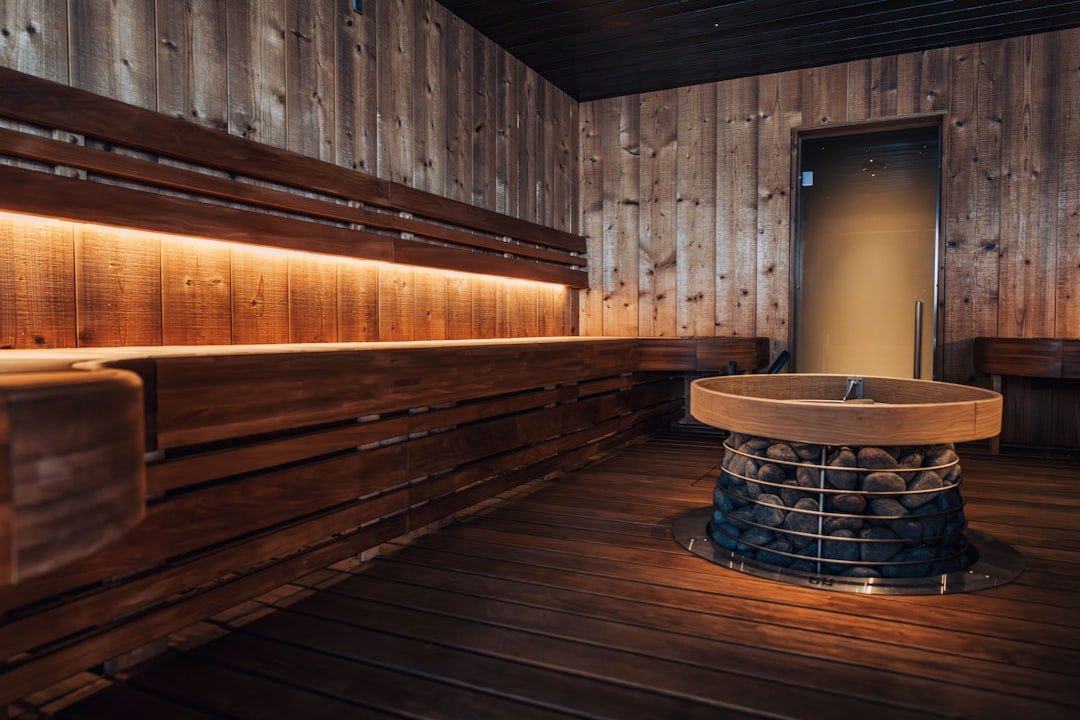
Scattered through the common area, you’ll find a variety of themed heat rooms with different temperatures or materials. Salt rooms, charcoal rooms, clay rooms, and jade rooms are common, and some facilities even add an ice room for contrast. Each one usually displays its temperature and benefits on a sign nearby. The general approach is to rotate between hot and cool environments, rest, hydrate, and repeat.
Many visitors spend three, four, or more hours doing exactly this. A number of jjimjilbangs operate 24 hours, so overnight stays are common. The sleeping hall — a large communal room with mats or cushions on a warm floor — costs little extra and stays perfectly safe.
Look around the common area and you’ll almost certainly spot people wearing their small towels twisted into a sheep-head shape (양머리, yangmeori). This turban-like loop balances on top of the head. It’s playful, and it keeps sweat out of your eyes in hot rooms. Over time, it’s become something of a jjimjilbang trademark — feel free to try it yourself.
- Wear your provided uniform in all co-ed areas — never enter these spaces from the bathing area without changing first
- Try the themed heat rooms (salt, clay, charcoal) and rotate with rest breaks in between
- The yangmeori towel turban is a fun and functional jjimjilbang tradition — do try it
- 24-hour facilities allow overnight stays; bring an eye mask if you’re a light sleeper
Jjimjilbang Snacks You Shouldn’t Skip
When hunger hits, the snack corner is an essential stop. Two items are practically synonymous with jjimjilbang culture. The first is sikhye (식혜), a chilled sweet fermented rice drink that’s mildly sweet and surprisingly refreshing. The second is maekbanseok gyeran, eggs slow-roasted in the heat rooms until the whites turn a pale brown. The heat deepens their flavor along the way. People eat them simply, with a bit of salt, and they taste inexplicably perfect in that context.
If you enjoy exploring Korean snacks, you might also recognize some favorites from convenience stores. Our guide to Korean convenience store snacks covers plenty of portable options worth knowing before your trip.
- Order sikhye and a roasted egg from the snack area — they’re a non-negotiable part of the experience
Practical Tips Before You Go
Facilities vary quite a bit. A large upscale jjimjilbang in a city center will feel very different from a smaller neighborhood bathhouse. It’s worth checking what a specific location provides before you arrive. That said, a few universal tips apply almost everywhere.
| Item / Situation | What to Know |
|---|---|
| Towels | Facilities usually provide small towels; larger towels may cost extra. We recommend bringing your own full-size towel. |
| Toiletries | Soap is common; shampoo and conditioner less reliably so. Bring your own or buy single-use packets on-site. |
| Payment | Many facilities use your wrist key for in-facility purchases (snacks, add-ons). Settle the bill when you leave. |
| Overnight stays | Common and affordable at 24-hour locations. The communal sleeping area has cushions on a warm floor — bring an eye mask. |
| Phones & valuables | Lock valuables in your main locker. Be mindful of photographing in or near the bathing areas — it’s a strict privacy issue. |
| Noise | Keep voices low in the sleeping areas and heat rooms. The atmosphere is calm and communal, not a party venue. |
One genuinely easy-to-miss tip: don’t rush. Jjimjilbangs invite you to linger. Koreans treat them as a full evening activity — bathing, sweating, eating, napping, and repeating. Let go of the clock, and you’ll start to understand why this place has been a cornerstone of everyday Korean life for decades.
A jjimjilbang visit fits naturally into a broader Korean wellness and self-care culture. It pairs well with the country’s famous skincare philosophy too. Our beginner’s guide to the Korean skincare routine makes a great companion read for understanding how Koreans approach taking care of their skin from the inside out.
Show up once, and follow these basics. By the time you’re sipping cold sikhye on a warm floor in your matching uniform, towel twisted into a lopsided sheep on your head, you’ll wonder what you were ever nervous about.
Leave a Reply