Tag: living in Korea

  • Suneung 2026: Why South Korea Pauses Flights

    Suneung 2026: Why South Korea Pauses Flights

    Suneung 2026 falls on Thursday, November 19, and For 25 minutes that afternoon, South Korea adjusts aircraft takeoffs and landings to minimize noise during the English listening test. Commuting hours shift. Extra subways run. Streets near exam halls close to traffic.

    If you live in Korea or you’re visiting that week, this guide explains what’s actually happening and why. It also makes one thing clear early: the flight pause is short, not a full-day shutdown.

    What Is Suneung?

    Suneung (수능) is short for 대학수학능력시험, the College Scholastic Ability Test. English speakers often call it the CSAT. It’s South Korea’s national college entrance exam, held once a year.

    University admissions in Korea depend heavily on this single test for many students. That’s part of why the exam date draws national attention, not just from students and families but from the government and transportation networks.

    • Suneung is a one-day, nationwide exam.
    • It’s officially known as the College Scholastic Ability Test (CSAT).
    • Results affect university admissions for many test-takers.

    Suneung 2026 Date: Which Exam Is It?

    The Suneung held in November 2026 is the exam for the 2027 academic year (2027학년도). Korean exams are named for the academic year students will enter, not the calendar year the test happens in.

    Here’s the key schedule information confirmed by official sources:

    Item Detail
    Exam date Thursday, November 19, 2026
    Academic year 2027 (2027학년도)
    Date announced by Ministry of Education
    Detailed plan announced by Korea Institute for Curriculum and Evaluation (KICE), June 30, 2026
    Score notification December 11, 2026
    2026 support measures announced October 20, 2026 (Ministry of Education)

    Why Does South Korea Pause Flights During Suneung 2026?

    The English section of Suneung includes a listening test. Airplane noise could disturb students during that portion, so authorities adjust takeoffs and landings while it runs.

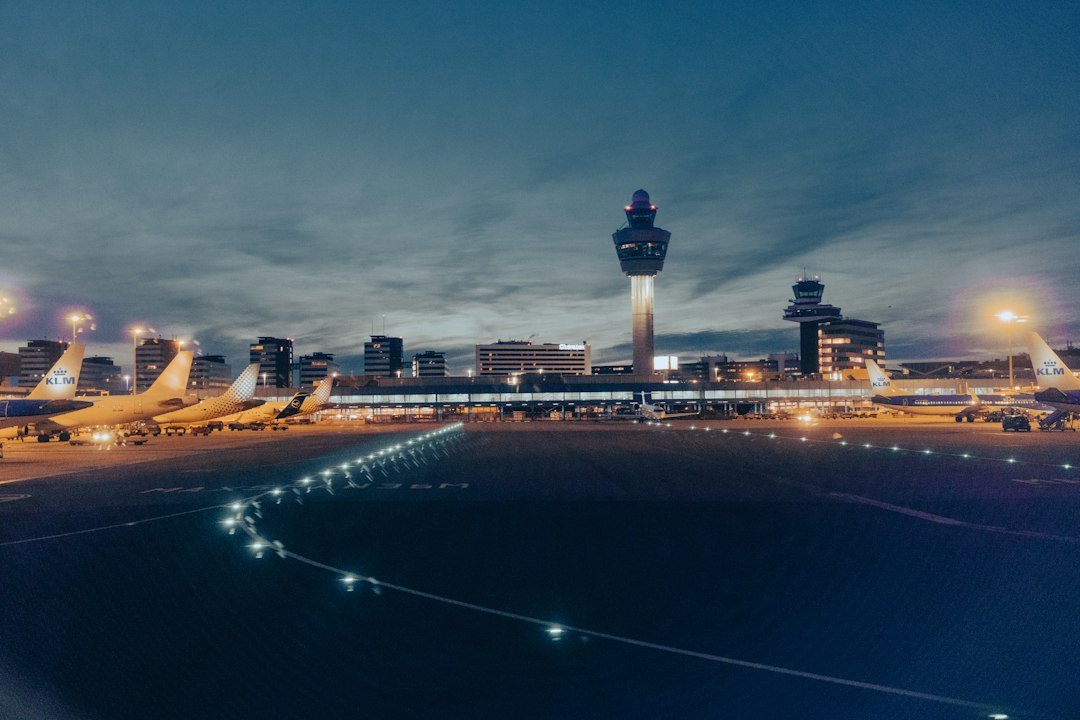
    Specifically, aircraft takeoffs and landings are restricted from 1:10 p.m. to 1:35 p.m. on November 19, 2026. That’s a 25-minute window, not a full day of grounded planes.

    Takeoffs and landings are restricted during the 25-minute listening test. Some flights may experience schedule changes before or after this period.

    If you’re flying in or out of Korea that afternoon, check your airline’s updated schedule. Individual flights may be affected beyond the restriction window itself.

    • Restriction window: 1:10 p.m. to 1:35 p.m. on November 19, 2026.
    • Reason: noise control during the English listening test.
    • Scope: this applies only during the listening test, not all day.

    If you’re arranging transport to or from Incheon Airport around exam day, build in extra time and confirm your flight status directly with the airline.

    How Else Does Korea Adjust for Exam Day?

    Suneung’s effects reach beyond airports. The government coordinates several measures to help students arrive on time and sit for the exam without disruption.

    • Commuting hours: The government asked for work start times to shift to after 10 a.m. to ease morning traffic. This is a request, not a rule, so not every company will follow it.
    • Public transit: Extra subway service runs in the Seoul area from 6:00 a.m. to 8:10 a.m.
    • Traffic control: Vehicle access is controlled within 200 meters of test sites.
    • Emergency transport: Support is provided to get examinees to the exam in an emergency.

    These measures target the morning commute and the exam site perimeter. They don’t change how airports or train networks operate outside those specific windows.

    Suneung Exam Day Culture in Korea

    Suneung has its own set of traditions, commonly described in Korean media and explainers. Many of them center on cheering for students and wishing them luck.

    • Juniors gather outside school gates with banners to cheer on older students.
    • Sticky sweets like yeot (taffy) and tteok (rice cake) are popular gifts, since “sticking” puns on being accepted.
    • Some students avoid seaweed soup (miyeokguk) on exam morning, according to the Seoulz explainer.
    • Many parents pray for their children around exam time.

    These customs show how much weight the exam carries socially, beyond the logistics of flights and traffic.

    What Visitors and Residents Should Know

    Whether you’re new to Korea or just passing through in November, a few practical points can save you a headache on exam day.

    • Check your airline’s updated schedule if you fly in the early afternoon, since flights may be affected beyond the restriction window.
    • Expect busier morning transit and plan extra time; extra subway service runs in the Seoul area from 6:00 a.m. to 8:10 a.m.
    • Expect limits on vehicle access within 200 meters of test sites.
    • Some offices may start later, but remember this is a government request, not a mandatory rule.
    • Exam rules and timings can change, so check official announcements closer to the date.

    Frequently Asked Questions

    When is Suneung 2026?

    Suneung 2026 is scheduled for Thursday, November 19, 2026. It’s the exam for the 2027 academic year.

    Do all flights in Korea stop during Suneung?

    No. Takeoffs and landings are restricted from 1:10 p.m. to 1:35 p.m. on November 19, 2026, during the English listening test. Check your airline’s updated schedule, since individual flights may be affected beyond that window.

    What does Suneung stand for?

    It’s short for 대학수학능력시험, the College Scholastic Ability Test (CSAT).

    When are the Suneung results released?

    Scores are scheduled to be notified on December 11, 2026.

    Sources and References

    • Ministry of Education, 2027 Suneung detailed plan notice (June 30, 2026): moe.go.kr
    • Yonhap News Agency, 2026 Suneung flight and traffic measures (October 20, 2026): en.yna.co.kr
    • CBS Nocut News, KICE detailed plan (June 30, 2026): nocutnews.co.kr
    • YTN, KICE detailed plan (June 30, 2026): ytn.co.kr
    • Seoulz, Korea CSAT Exam Day (March 5, 2026): seoulz.com

    This guide was compiled on October 27, 2026 from the pages listed above under Sources and References. Exam arrangements can change, so check official announcements before you travel or plan around exam day.

    Photo by Rita Candeias on Unsplash
  • Korean Address in English: Order, Examples & Postal Codes

    Korean Address in English: Order, Examples & Postal Codes

    A Korean address in English usually starts with the building number and road name, followed by the district, city, five-digit postal code, and country.

    For apartments, you’ll also need the building (dong) and unit (ho) numbers.

    Below, you’ll find formatting examples and a step-by-step guide to checking your address before placing an order or sending a package.

    Korean Address in English: The Basic Order

    Korea Post’s own sample reads: 33, Beobwonbuk-ro, Yeonje-gu, Busan, 47502 Rep. of KOREA. The Korean original is 부산시 연제구 법원북로 33, with postal code 47502.

    The order runs from the smallest unit to the largest. Here’s the sequence to follow.

    • Building number and road name
    • District (gu)
    • City
    • Five-digit postal code
    • Country

    Korea Post also says to write the destination city and country in capital letters. Don’t underline the country, city, or postal code.

    Road Name Address vs Lot-Number Address

    Korea has two address styles, and both can show up on the same website or delivery slip. According to the IBS Korea living guide, the road name address (도로명주소) officially started on January 1, 2014.

    The older lot-number address (지번 주소) was officially decommissioned on December 31, 2013. It is still widely used today, though.

    • Road name address: built on a street name and building number, like addresses in North America or Europe.
    • Lot-number address: built on neighborhood (dong) and lot number, with no street name.

    Use the road name address whenever you can. Korea Post notes that a lot number (번지) is written without a marker, so 141번지 becomes 141.

    How to Read the Parts of a Korean Address

    Each Korean place name ends with a short unit word. Korea Post’s guide joins that suffix to the name with a hyphen in English.

    For example, 군산시 becomes Gunsan-si, 구로구 becomes Guro-gu, and 반포동 becomes Banpo-dong.

    Road names also end in a type word. The IBS guide lists three:

    • daero (대로): a boulevard with more than eight lanes
    • ro (로): a road with 2 to 7 lanes
    • gil (길): a street for anything else

    These suffixes generally indicate different types of roads. Still, the official address should always be used as written.

    A name such as 사직로3길 is a side street off Sajik-ro. Its English form can appear in different styles, such as “Sajik-ro 3-gil” and “Sajik-ro-3-gil.” Copy the form shown by the official address search.

    Apartments: How to Write Dong and Ho

    Apartment addresses need extra care, because the dong and ho numbers must match the Korean address exactly.

    Dong (동) is the building number, and ho (호) is the unit number. The IBS guide shows that 102동 304호 can be written as “102-dong 304-ho” or simply “102-304.” Another reference gives “Apt. 102-304” and “Bldg. 102 Unit 304.”

    The IBS guide also explains the unit number pattern. In 304, the first digit is the floor, so the unit sits on the third floor. This is a common pattern, not a rule for every building.

    • Keep the building (dong) and unit (ho) numbers exactly as provided by the recipient.
    • Put them on their own line if the form has a second address line.
    • Follow the format your shop or carrier asks for.

    If you’re settling into a Korean apartment for the first time, local systems can feel unfamiliar beyond just the address. Our guide to Korean trash sorting for foreign residents covers another everyday system that trips people up early on.

    How to Find Your Postal Code for a Korean Address in English

    The official Road Name Address website, https://www.juso.go.kr  helps you check a Korean address in English using a road name, building name, or older lot-number address. You can also use the service to look up English address information and postal codes.

    Follow these steps:

    1. Search for your address. Visit Juso.go.kr and enter the Korean road name address, building name, or lot-number address.
    2. Check the correct building. Make sure the road name, building number, and location match the recipient’s address.
    3. Check the English address and postal code. Use the official English spelling and note the five-digit postal code shown for the matching address.
    4. Add apartment details. If the recipient lives in an apartment, include the building (dong) and unit (ho) numbers exactly as provided.

    You may see English addresses written with or without a comma after the building number, such as “58 Banpo-daero” and “58, Banpo-daero.”

    The Korean government’s English address formatting guidance, from the Ministry of the Interior and Safety, is a recommendation. It isn’t a single mandatory format for every situation.

    The safest approach is to use the English address provided by the official address service. Then follow the shipping carrier’s requirements on top of that.

    There are also physical clues worth checking. The IBS guide says apartments might display the postal code near the mailboxes or inside the elevator on the inner doors.

    Always verify the complete address and postal code before submitting an order or sending a package.

    Address Examples

    The examples below demonstrate common formats for a Korean address in English. Always verify the actual address and postal code before shipping. The recipient in the second example is a sample name, not a real person.

    Type Korean English
    Building (Korea Post sample) 부산시 연제구 법원북로 33, 47502 33, Beobwonbuk-ro, Yeonje-gu, Busan, 47502 Rep. of KOREA
    Apartment (format example) 서울 종로구 사직로3길 23, 102동 304호, 30174 Gildong Hong, 102-dong 304-ho, 23 Sajik-ro 3-gil, Jongno-gu, Seoul 30174, SOUTH KOREA


    • Double-check the postal code against the official address search before shipping.

    Both comma styles appear in English address examples. Follow the official address search result and your shipping provider’s formatting requirements.

    Filling In Online Shopping and Parcel Forms

    Forms differ from site to site, so match the fields to the parts you actually have.

    • Address line 1: building number and road name
    • Address line 2: dong and ho, or the building name
    • District, city, postal code, country: each in its own field if the form has one

    If the form asks for only one line, write the whole address in the order shown above. When there’s a separate country field, select South Korea or Republic of Korea instead of repeating the country in the street address.

    For parcels sent to Korea, Korea Post advises writing addresses in English and in the language of the destination country. That’s its general guidance for international mail.

    Adding the Korean address as well may help local staff read it. Customs rules and fees are a separate topic, so check them with your carrier or Korea Post.

    If you’re shopping from a Korean site like Olive Young and shipping internationally, this same field-matching approach applies at checkout.

    Common Mistakes

    • Writing the city first, as in a Korean address, instead of last.
    • Mixing the road name address and the lot-number address in one line.
    • Dropping the dong or ho number for an apartment.
    • Leaving out the postal code, or copying an old one from a lot-number address.
    • Spelling a name differently from the official English result.

    Frequently Asked Questions

    Should I use the road name address or the lot-number address?

    Use the road name address if you have it. The lot-number system was officially decommissioned on December 31, 2013, though it is still widely used.

    How many digits is a Korean postal code?

    The current examples from Korea Post have five digits, such as 47502 and 03187.

    How do I write 102동 304호 in English?

    The IBS guide gives “102-dong 304-ho” and “102-304.” Other references show “Apt. 102-304” and “Bldg. 102 Unit 304.” Keep the numbers the same as the Korean address.

    Do I need to write Korea at the end?

    If the form has a country field, select South Korea or Republic of Korea. Korea Post’s written sample puts “Rep. of KOREA” at the bottom of the address.

    Can I write the Korean address in Hangul on an English form?

    Some forms accept Hangul and some don’t. For international parcels, Korea Post advises including the address in the destination country’s language alongside English.

    Key points

    • Use the road name address when possible.
    • Korean postal codes have five digits.
    • Keep dong and ho numbers exactly as given.

    Official Sources

    This guide was compiled on October 21, 2026 from the pages listed above under Official Sources. Postal codes and address rules can change, so confirm your Korean address in English on the official tools before you order or ship anything.

    Photo by Mediamodifier on Unsplash

  • How to Use Korean Ondol Floor Heating: The Boiler Panel Explained

    How to Use Korean Ondol Floor Heating: The Boiler Panel Explained

    You walk into your Korean apartment on a cold night, sit down on the floor, and wait. Nothing happens. The floor stays cold, and the little panel by the front door is covered in Korean characters you can’t read yet. This is a common puzzle for newcomers to ondol floor heating, and the good news is that it only takes a few minutes to understand once someone explains it clearly.

    What Is Ondol Floor Heating, Really?

    Ondol is Korea’s traditional underfloor heating method. In modern apartments, a gas or electric boiler heats water, and that hot water circulates through pipes running under the floor.

    Instead of warming the air like a radiator does, the floor itself becomes warm and heats the room from the ground up. In everyday conversation, Koreans often just use the word “ondol” to mean home heating in general, even though the actual system is boiler-based.

    The same boiler usually does double duty: it heats the floor and also supplies hot water for your shower and sink. Both functions are controlled from one wall panel, typically placed near the front door or somewhere in the hallway.

    • Ondol heats the floor directly, not the air
    • One boiler often handles both floor heating and hot water
    • The control panel is usually near the entrance or hallway
    • Most panels are labeled only in Korean

    Decoding the Ondol Floor Heating Panel

    Every panel looks a little different, but several button names show up again and again. Learning these few words clears up much of the confusion.

    Korean Romanization What it usually means
    전원 jeonwon Power on/off
    난방 nanbang Heating. On some panels this sets room temperature, on others it sets the floor pipe water temperature
    온수 onsu Hot water for showers and taps
    외출 oechul Away mode
    예약 yeyak Schedule or timer
    난방끔 nanbang-kkeum Turns off floor heating only, while the system stays powered on. Not every panel has this button

    Panel layouts and button names can differ between brands, so don’t assume yours matches exactly. If your panel looks different from this list, it’s worth asking your landlord to walk you through it once.

    Away Mode vs. Turning Everything Off

    One detail trips up a lot of newcomers: 외출 (oechul), or away mode, does not shut the boiler down completely. It keeps the system running at a low level, mainly to stop the pipes from freezing and to save energy while you’re out.

    In winter, it’s better to switch to away mode when you leave rather than turning the heating off entirely. Fully powering down the system in cold weather can leave pipes vulnerable.

    • Away mode keeps a low background temperature running
    • It is meant for freeze prevention and energy saving, not full shutdown
    • Use away mode instead of full power-off during winter outings

    Seasonal habits matter too. Many people in Korea choose hot-water-only mode in summer, so the floor doesn’t heat up while they still get hot showers. In winter, they switch to heating plus hot water together.

    Why Is My Floor Cold? A Quick Checklist

    If your floor should be warm but isn’t, work through a short checklist.

    • Check that the panel is actually set to heating, not away mode or hot-water-only
    • Check that the target temperature is set high enough
    • In a rental or guesthouse, the boiler may have been left in away mode between guests, so ask your landlord or host
    • Some apartments allow room-by-room control, so the heating might simply be set for a different room

    Asking your landlord or host directly is often the fastest fix. This kind of quick check applies to plenty of everyday apartment questions in Korea, similar to working out Korean trash sorting rules when you first move in — the system makes sense once someone shows you the local version.

    A classic companion habit in Korean winters is putting bubble wrap on windows. It’s a common way to help keep heat inside the room.

    One Safety Note

    If the boiler panel shows an error message or you smell gas, don’t try to fix it yourself. Contact your landlord or building management right away instead of experimenting with the panel.

    Panels, button layouts, and even house rules around heating can differ from one building to another. When in doubt, your landlord or building management is the best source for how your specific ondol floor heating system works.

    Photo by Nayanika Mukherjee on Unsplash

  • Korean Trash Sorting: A Practical Guide for Foreign Residents

    Korean Trash Sorting: A Practical Guide for Foreign Residents

    You just moved into a new place in Korea, finished unpacking, and now you’re standing over your kitchen trash can wondering what on earth to do with it. Can you just use a regular plastic bag? Where does the chicken bone go? Korean trash sorting trips up almost every new resident at first, but the logic behind it is actually pretty simple once someone walks you through it.

    The Bag Is Not Optional: Understanding Jongnyangje

    Korea has run on a Volume-Based Waste Fee system, known as jongnyangje (종량제), since 1995. The core idea is that you pay for waste disposal by the bag, not through a flat tax.

    In practice, this means general household trash has to go into an official jongnyangje bag (종량제 봉투), sold at convenience stores and supermarkets. You cannot just grab a free plastic bag from a store and toss your trash in it.

    Here’s the part that surprises a lot of foreigners: these bags are specific to your district, called a gu (구) in Korean. A bag bought in one district will not be accepted in another, even one right next door.

    • Buy jongnyangje bags locally, ideally near where you live
    • Check the size options, since bags usually come in a few different volumes
    • Keep a few on hand so you’re not caught without one on collection day

    If you’re stopping by a nearby convenience store anyway, it’s worth asking staff where the jongnyangje bags for your area are kept.

    The Five Categories of Korean Trash Sorting

    Once you understand the bag system, the next step is learning the categories. Korean trash sorting generally breaks down into five types.

    Category What Goes Here
    General waste Everyday trash that isn’t food or recyclable, in a jongnyangje bag
    Food waste Edible scraps, disposed separately via bin, RFID machine, or food-waste bag
    Recycling Paper, plastic, cans, glass, styrofoam
    Special waste Batteries, fluorescent lamps, small electronics
    Bulky waste Furniture and large appliances, with a disposal sticker or permit

    For recycling, a little prep work matters. Rinse out containers, remove labels and stickers where you can, and flatten boxes before putting them in a clear bag or your building’s labeled bin.

    Dirty or greasy containers can get your whole batch of recycling rejected, so this step isn’t just a nicety. For bulky items like a broken chair or an old refrigerator, you’ll need to buy a disposal sticker or permit through your district office before leaving it out.

    Food Waste: Where Most People Get Korean Trash Sorting Wrong

    Food waste sounds straightforward, but it’s actually one of the trickiest parts of Korean trash sorting. The category is meant for things that can be processed back into animal feed or compost, not just anything that came from your kitchen.

    A surprising number of food-related items actually belong in general waste, not food waste. This catches almost every new resident off guard at least once.

    • Bones of any kind, including chicken, fish, or pork bones
    • Shells and eggshells
    • Fruit pits and hard seeds
    • Coffee grounds and used tea bags

    All of these go into your general waste jongnyangje bag, not the food waste bin. It feels counterintuitive since they’re technically food, but they don’t break down the way vegetable scraps or rice do.

    Food waste itself is often handled through a dedicated bin, and in many buildings you’ll find an RFID machine that weighs your waste and charges based on that weight. Other buildings rely on designated food-waste bags instead, so check which system your building actually uses.

    Apartments vs. Smaller Buildings: Why Your Experience Will Differ

    Where you live changes how all of this plays out day to day. High-rise apartment complexes tend to have a dedicated recycling and waste area inside the complex itself.

    These areas often allow disposal nearly any time, with separate containers already set up for each category. That setup makes the whole process far more forgiving for beginners, since the categories are physically laid out in front of you.

    Smaller multi-unit buildings and standalone houses work differently. Collection days, bag requirements, and specific rules are set by the local district office, and they vary more from one building to the next.

    In these buildings, trash might only go out on certain days of the week, or get left in a shared spot on the street rather than inside a complex. That means the system you learn from a friend in a different neighborhood might not match your own building at all.

    When the Rules Don’t Match What You Expected

    Because Korean trash sorting rules shift by district and by building type, don’t assume what worked in one apartment applies everywhere. Collection schedules, exact food waste bag requirements, and fees are all set locally.

    Your landlord or building management office is often the fastest source of answers, especially for a new tenant. Many district (gu) office websites also publish local waste rules, sometimes with English information for international residents.

    It’s worth asking these questions in your first week rather than guessing:

    • Where do I buy jongnyangje bags for this specific district?
    • Does this building use an RFID food waste machine or designated bags?
    • What are the collection days for general waste and recycling?
    • Who do I contact for bulky waste disposal, like an old desk or mattress?

    It genuinely feels like a lot in the first month. But once you’ve internalized the five categories and know your building’s quirks, sorting trash becomes a quick, almost automatic habit rather than a weekly puzzle.

    Photo by Otto Freijser on Unsplash