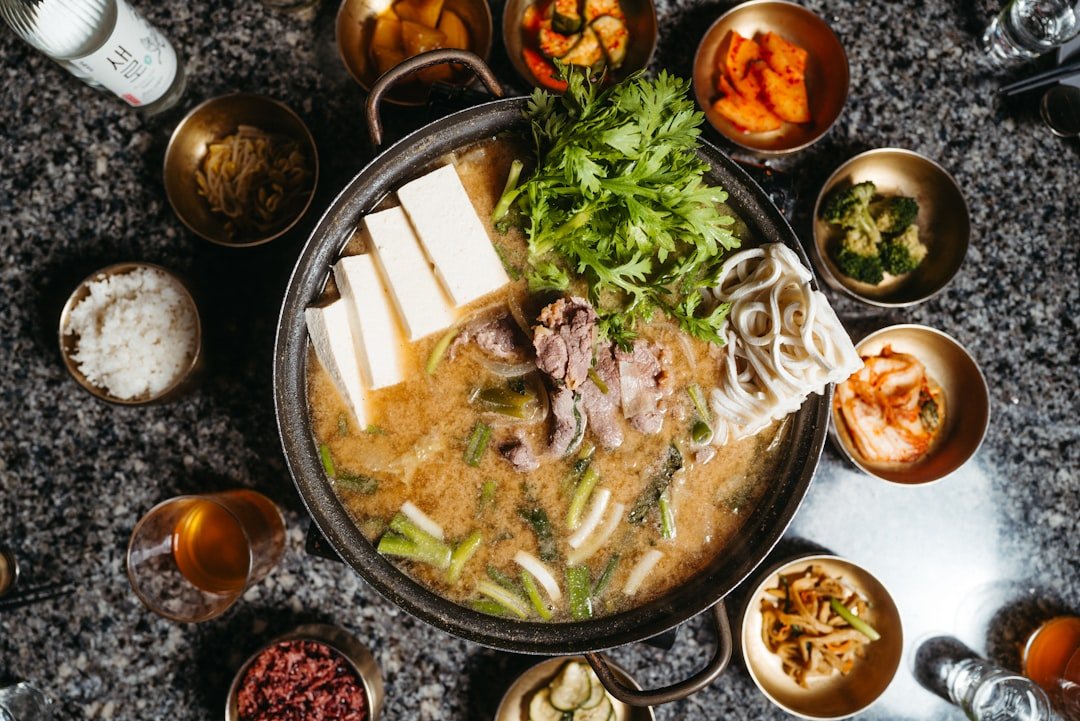
You sit down at a Korean BBQ restaurant. A grill sits embedded right in the center of the table, tongs are placed to the side, and a dozen small dishes are already fanned out before you’ve even opened the menu. If you’ve never done this before, it can feel like everyone around you knows exactly what to do. Korean BBQ etiquette isn’t a rigid set of rules, but understanding the flow of the meal makes the whole experience click into place.
How Ordering Works: Portions, Cuts, and What to Expect
Korean BBQ etiquette starts before the meat even hits the grill. You order meat by the portion (인분, inbun), not by individual pieces. One portion typically serves one to two people, and most tables order two or more portions of a single cut. If you’re a group of four, ordering two to three portions of one or two cuts is a natural starting point.
Gogigui (고기구이), which literally means “grilled meat,” covers a range of cuts you’ll see on most menus. Popular choices include samgyeopsal (thick-cut pork belly), chadolbaegi (thinly shaved beef brisket), and galbi (marinated short ribs). Marinated cuts like galbi tend to have a sweeter, richer flavor. Unmarinated cuts let you taste the meat itself, often dipped in sesame oil and salt at the table.
- Order by portion (인분), not by piece
- Two or more portions per cut is standard for a table
- Unmarinated cuts: dip in sesame oil + salt
- Marinated cuts: often eaten as-is or with ssamjang
- To get a server’s attention, a polite “여기요!” (yeogi-yo!) meaning “over here!” works well; servers expect this and won’t think it’s rude
Banchan: The Free Side Dishes
The banchan (반찬), the small side dishes that arrive automatically, are free and refillable. Kimchi, pickled radish, bean sprouts, spinach, sliced garlic, and green onion salad are all common. Asking for seconds is completely normal, and no one will think you’re being greedy.
At the Grill: Who Cooks, and How
In many Korean BBQ restaurants, a staff member grills the meat for you, at least at first. In others, the table handles it themselves, and one person often takes charge of the grill. Most people let that person work without interfering once they’ve taken over. If dining with Koreans, this role often falls to the eldest or the host.
The key tool is the tongs. Staff sometimes use scissors too, snipping meat into bite-sized pieces right on the grill. Tongs are for grilling, and chopsticks are for eating. Locals consider it unhygienic to touch raw or cooking meat with personal chopsticks, and you’ll notice they never do it.
- Use tongs for grilling, chopsticks only for eating
- Staff may use scissors to cut meat on the grill — this is normal
- Don’t constantly rearrange or flip the meat; let it sear and develop a crust before turning it over
- It’s tempting to load everything onto the grill at once. Doing so lowers the temperature and cooks unevenly, so grill in small batches instead
- If you’re unsure whether to grill yourself, just ask — people appreciate the consideration
One easy-to-miss point: don’t blow your nose at the table. The smoke, heat, and spice can make the urge strike, but Korean dining culture considers this quite rude. Step away from the table if needed.
| ✅ Do | ❌ Don’t |
|---|---|
| Use tongs to handle meat on the grill | Use your personal chopsticks to touch raw or cooking meat |
| Grill in small batches for even cooking | Pile all the meat onto the grill at once |
| Let meat sear before flipping | Flip constantly or rearrange without coordination |
| Pour drinks for others before yourself | Pour your own drink before others’ glasses are filled |
| Step away from the table to blow your nose | Blow your nose at the table |
The Ssam Wrap: Korean BBQ Etiquette at Its Most Delicious
If there’s one ritual that defines Korean BBQ etiquette, it’s the ssam (쌈), wrapping grilled meat in a leafy green. A ssam combines grilled meat, rice, sauce, and banchan, all wrapped in a fresh lettuce leaf. It’s one of the most authentic ways to eat Korean BBQ. Perilla leaves (kkaennip, 깻잎) are another common option. They carry a slightly more herbal, anise-like flavor compared to the mild crunch of green leaf lettuce.
To build a proper ssam, take a lettuce or perilla leaf in your palm. Add a small piece of grilled meat, a pinch of rice, and a thin slice of raw garlic. Finish with a small dab of ssamjang, a thick, savory paste made from fermented soybean paste and chili paste. Fold the wrap and eat it in one bite. Most people avoid taking multiple bites because the wrap can fall apart; if yours feels too large, just make a smaller one.
- Lettuce (상추, sangchu): mild, most common ssam leaf
- Perilla leaf (깻잎, kkaennip): herbal, slightly stronger flavor
- Ssamjang: the classic dipping paste — savory, slightly spicy, earthy
- Add sliced raw garlic and a small piece of kimchi for the full local experience
- Eat the whole wrap in one bite — fold it fully before putting it in your mouth
Drinking Etiquette: Pouring for Others
Drinking etiquette is worth knowing too, especially if soju or beer is on the table. Korean dining culture considers it polite to pour drinks for others first, especially in a group. If someone pours you a drink, hold your glass with both hands to show respect. You don’t pour your own drink. Instead, you wait for someone at the table to do it for you, and you do the same in return.
How to Finish the Meal: The Starchy Finale
One thing many first-time visitors miss entirely is how a Korean BBQ meal is supposed to end. The grilled meat feels like the main event, but Koreans see it as just the buildup to the real closer. They usually close a BBQ meal with something starchy or brothy: doenjang jjigae (soybean-paste stew), naengmyeon (cold noodles, especially after beef), or fried rice made in the leftover fat.
Naengmyeon (냉면) is thin, chewy buckwheat noodles served cold, either in an icy beef broth (mul naengmyeon) or tossed in a spicy sauce (bibim naengmyeon). Some people order naengmyeon to share at the end of the meal instead of rice. They enjoy the cool, icy noodles after the hot, greasy BBQ. Doenjang jjigae is a bubbling soybean-paste stew, rich and deeply savory, traditionally served in a stone pot alongside rice.
- Order the stew or noodles when the meat feels like almost enough, not after you’re already full
- Naengmyeon: cold buckwheat noodles, often shared between the table
- Doenjang jjigae: fermented soybean-paste stew with tofu and vegetables, pairs naturally with rice
- Some restaurants offer fried rice cooked directly in the leftover grill fat — a smoky, savory treat worth trying
- Restaurants usually charge for rice (공기밥, gonggi-bap) separately, and it may not come with the meat automatically
This closing ritual reflects something important about Korean dining culture. For Koreans, the focus of every meal is rice and stew or soup, with side dishes alongside. Even at a BBQ restaurant, the grilled meat is almost an accompaniment to rice, not the other way around. Understanding this shifts the whole meal from a series of random dishes into something with a real shape and rhythm.
Korean BBQ is one of those experiences that rewards a bit of preparation. The rules aren’t strict, but knowing the flow lets you relax and actually enjoy it. If you’re planning a trip to Korea and want to go deeper into local food and culture, you might also enjoy exploring A Beginner’s Guide to the Korean Skincare Routine, another area where knowing the logic behind the steps makes everything feel more intuitive. Korea tends to reward that kind of curiosity.