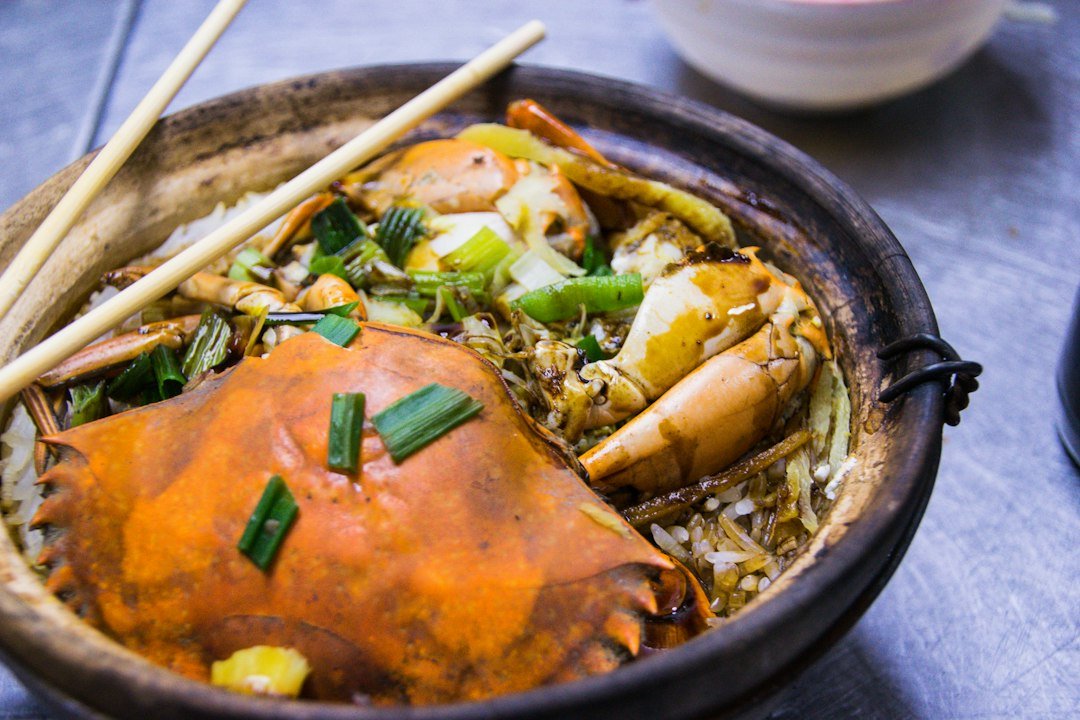
Ganjang gejang is a Korean dish made by curing raw crab in a mild soy sauce based brine. It is eaten with steamed rice. According to The Korea Herald, the dish traditionally uses fresh blue crabs, known in Korean as kkotge.
The Korea Herald notes that ganjang gejang began as a regional specialty in Korea’s coastal provinces. Over time, it became popular across the country.
The Korea Herald (2018) describes the general method in broad terms: the soy brine is strained, boiled, and poured over the crabs several times across a few days. This post does not give exact amounts or timing.
Seoul Economic Daily, citing TasteAtlas, describes the dish simply as blue crab marinated in a soy sauce that has been boiled with various ingredients, then aged. The crab itself is raw.
Why Ganjang Gejang Is Called a “Rice Thief”
Koreans have a nickname for this dish: bapdoduk, which translates to “rice thief.”
The Korea Herald (2018) gives two reasons the nickname fits ganjang gejang. First, the salty brine pairs with rice, so people eat extra rice to balance the saltiness. Second, the dish is simply hard to stop eating once you start.
- Bapdoduk means “rice thief” in Korean
- Salty brine encourages eating more rice alongside it
Seoul Economic Daily adds that the combination of savory soy sauce and sweet crab meat is what earned the dish this reputation.
Ganjang Gejang vs. Yangnyeom Gejang
There are two main versions of marinated crab in Korea. TasteAtlas, as cited by Seoul Economic Daily, distinguishes them by their base: soy sauce or spicy chili sauce.
Ganjang gejang uses the soy based brine described above. Yangnyeom gejang swaps that brine for a spicy red sauce. The Korea Herald (2018) notes that for yangnyeom gejang, crabs are opened and cut into pieces before marinating, so the sauce coats the meat evenly.
| Type | What It Is |
|---|---|
| Ganjang Gejang | Raw crab cured in a soy sauce based brine |
| Yangnyeom Gejang | Crab cut into pieces and marinated in spicy red sauce |
How Ganjang Gejang Is Eaten
The Korea Herald (2024) says this dish is mainly eaten with rice. It calls the top shell the best part of the meal, where roe and tomalley, the creamy brown substance inside the shell, mix with a spoonful of rice.
The Korea Herald (2013) offers a few practical tips worth knowing before you try it. Diners are advised to save a spoonful or two of rice specifically for the top shell. Meat is sucked from the shell, and claws are broken open with a cracker.
- Save some rice for mixing with roe and tomalley in the top shell
- Meat is sucked directly from the shell
- Claws are typically cracked open with a tool
- The Korea Herald (2018) notes restaurants often provide plastic gloves, since the brine can leave a smell on hands
These are habits described by The Korea Herald, not universal rules. Practices can differ from one restaurant to another.
When Is Ganjang Gejang in Season?
According to The Korea Herald (2018), female crabs carrying roe are considered best in late spring. In autumn, preference shifts toward male crabs, which are fatter at that time of year. The Korea Herald (2013) also points to autumn as a good season for male crabs.
That said, the 2018 article also mentions that frozen crabs are used today as well. This means ganjang gejang can be found year round, not only during these peak windows.
- Late spring: female crabs with roe, according to The Korea Herald
- Autumn: fatter male crabs, according to The Korea Herald
- Frozen crab use means the dish is available outside these seasons too
Why Ganjang Gejang Is in the News
Seoul Economic Daily reported on July 6, 2026, that TasteAtlas ranked ganjang gejang first in its World Best Crab Dishes list, released in June 2026. The dish reportedly scored 4.2 out of 5 on that list.
The same report notes that foreigners have traditionally been hesitant about eating raw crab.
The Korea Herald (2024) offers a related observation: the bold, raw, and slightly briny flavors of ganjang gejang may be an acquired taste for some people. That’s worth keeping in mind if you’re trying it for the first time.
A Note for First-Timers
Ganjang gejang is served raw. If you have questions about eating raw seafood, it’s worth asking the restaurant directly or checking official health guidance in your situation.
If you are curious about another Korean dish, our kimjang bossam guide covers boiled pork eaten with fresh kimchi.
Not everyone will love ganjang gejang right away, and that’s fine. Flavor preferences vary, and so do how individual restaurants prepare and serve it.
Photo by Vernon Raineil Cenzon on Unsplash