You’ve just landed at Incheon Airport, and now comes the real question: how do you actually get from here into the city? Figuring out Incheon Airport to Seoul transportation comes down to three realistic choices: the AREX train, an airport limousine bus, or a taxi.
This 2026 guide compares fares, travel times, bus routes and late-night options. It draws on Incheon Airport, Airport Railroad, Korea Tourism Organization and Seoul Metropolitan Government pages, checked on October 21, 2026.
Incheon Airport to Seoul: Quick Comparison
Here’s a snapshot before we get into details. Fares and times can change, so treat these numbers as a starting point rather than a guarantee.
The AREX All-Stop Train has the lowest fare of the three options from Incheon Airport to Seoul. The Express Train trades that savings for speed to Seoul Station.
| Option | Travel time | Cost | Suited to |
|---|---|---|---|
| AREX Express | About 43 min (T1) or 51 min (T2) to Seoul Station | ₩13,000 (adult) | Seoul Station |
| AREX All-Stop | About 59 min (T1) or 66 min (T2) to Seoul Station | ₩4,750 (T1) / ₩5,350 (T2) with transportation card | Hongdae and budget travel |
| Airport limousine bus | Depends on route and traffic | Route 6001: ₩17,000 (adult) | Hotels near a bus stop |
| Taxi | Depends on destination and traffic | Metered. ₩4,800 base fare is only the starting fare | Families, groups, heavy luggage |
Keep in mind that the AREX times above cover the train ride only. They don’t include walking, waiting, or any transfer.
AREX Airport Train: Speed and Budget
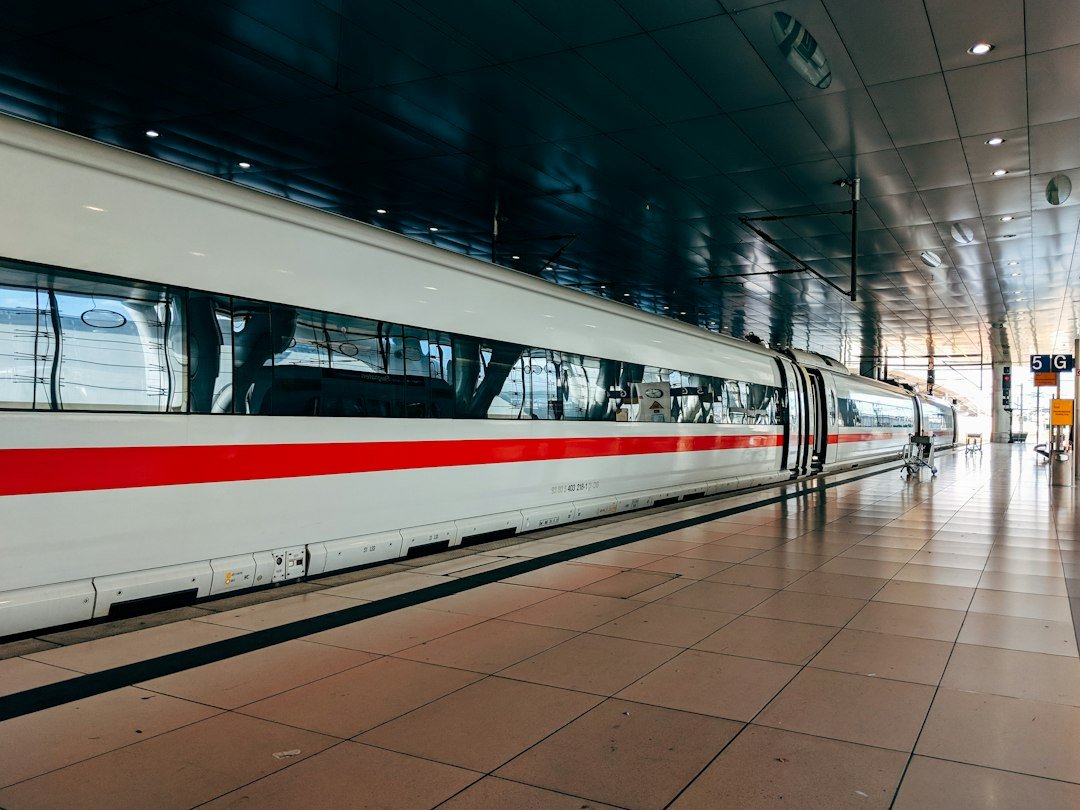
The Airport Railroad, known as AREX, links Incheon Airport with Seoul. It runs two kinds of service: an Express train and an All-Stop train. Both board from the B1 level of the Transportation Center at each terminal, according to the airport’s railroad guide.
AREX Express
The Express train runs nonstop between the airport and Seoul Station, according to the Korea Tourism Organization (KTO). It does not stop at Hongik University Station.
- Terminal 1 to Seoul Station: about 43 minutes
- Terminal 2 to Seoul Station: about 51 minutes
- One-way adult fare: ₩13,000
Express tickets are sold online or at station machines, according to KTO. The official Airport Railroad fare table also lists the adult fare as ₩13,000.
AREX All-Stop
The All-Stop train makes 14 stops, according to the airport’s route map. These include Hongik University, Gongdeok, Digital Media City and Gimpo Airport, ending the line at Seoul Station.
KTO notes that the All-Stop train accepts single-use tickets, prepaid cards, postpaid transportation cards and commuter passes.
AREX All-Stop Fares in 2026
The official Airport Railroad fare table lists these adult fares between Incheon Airport and Seoul Station:
| Departure | Adult fare | Approximate travel time |
|---|---|---|
| Terminal 1 | ₩4,750 | 59 minutes |
| Terminal 2 | ₩5,350 | 66 minutes |
These fares apply only when you use an accepted prepaid or postpaid transportation card. A single-use ticket costs an extra ₩100, plus a refundable ₩500 deposit.
Fares to other stations, including Hongdae, are different. Check the official AREX fare table for your specific destination before you travel.
Which AREX Train Should You Choose?
- Pick the Express if Seoul Station is your final stop or your transfer point.
- Pick the All-Stop for Hongdae or any station along the line.
- AREX does not stop at Myeongdong.
For train fares and schedules, the airport lists the AREX hotline as 1599-7788.
Airport Limousine Bus: Hotel Access
An airport limousine bus can work well if your hotel sits near a designated stop. Buses fan out across Seoul neighborhoods, so a single bus may get you there without a subway transfer. Traffic, though, can stretch the ride.
How to Pay for the Airport Bus
You buy a ticket before boarding at the airport. According to the airport’s limousine guide, no advance reservation is required, but you can also book ahead through a mobile app. Otherwise, pay by transportation card or credit card at the terminal.
- KTO says cash and transportation cards aren’t accepted on board when leaving the airport.
- For route 6001 at its Seoul hotel stops, the operator runs first come, first served seating with no online reservation.
- At those hotel stops, you can pay by transportation card or cash when boarding.
Where to Buy Tickets
- Terminal 1: KTO lists ticket booths inside the terminal near exits 4 and 9, and outside near exits 4, 6, 7, 8, 11 and 13.
- Terminal 2: The airport’s guide places the ticket booth on the basement level. You can buy from staff or use a kiosk, which moves faster when the booth gets crowded.
How to Find Your Bus
- Go to the Incheon Airport website.
- Open the “To & From” menu, choose Public Transport, then select “Search Buses.”
- Enter your destination.
- Click the route to see the boarding location for each terminal.
Airport Bus Fares
Fares are route-specific. Route 6001, which serves Dongdaemun, Myeongdong, Seoul Station and Sinyongsan, costs ₩17,000 for adults and ₩12,000 for children, according to the operator. Other routes differ.
The child fare applies to ages 6 to 13, per the airport’s limousine guide. Children under 6 travel free with an adult, though a child who needs a separate seat pays the child fare.
Taxi from Incheon Airport to Seoul: Convenience and Heavy Luggage
A taxi takes you door to door with zero transfers. That makes it worth considering for families, groups and anyone wrangling several suitcases.
What a Taxi Costs
Fares shift with destination, traffic, taxi type and time of day. The airport’s official taxi page lists these figures:
- Base fare: ₩4,800 for a standard taxi, ₩7,000 for a deluxe or jumbo (9-seater) taxi.
- Night surcharges for standard taxis serving Seoul and Incheon: 40% from 23:00 to 02:00, and 20% from 22:00–23:00 and 02:00–04:00.
- Gyeonggi taxis add a 30% surcharge from 23:00 to 04:00.
- No boundary surcharge applies for trips from the airport to Seoul, Incheon, Goyang, Gwangmyeong, Gimpo and Bucheon.
Remember: the base fare is only the starting amount. The airport’s page gives no total for a trip into Seoul, so expect the meter to climb well past that. An undated Visit Seoul page notes that an airport expressway toll gets added on top of the meter fare — ask your driver about tolls before you set off.
Taxi Stands
Standard taxis to Seoul board at 5C, 6C or 6D at Terminal 1, and at 7C at Terminal 2, according to the airport’s taxi page. Deluxe and jumbo taxis use 7C or 8C at Terminal 1 and 7D at Terminal 2.
International and Smart taxis offer a flat fare within Seoul and board at 4C (Terminal 1) and 3C (Terminal 2). KTO notes International Taxis need an advance reservation; the hotline is 1644-2255. Stand codes can differ by terminal, so confirm yours on the airport’s taxi page before you board.
Taking a Taxi Safely
- Follow signs to the official taxi stands.
- Tell the driver your destination, or show your hotel address in Korean.
- Confirm the taxi type before you get in.
- Check the meter and the final amount at the end of the ride.
Incheon Airport warns that call vans posing as taxis often solicit passengers and overcharge them. Stick to the designated stands.
Which Transportation Suits Your Destination?
Your final destination should decide which option you pick. Use this table as a starting point, not a hard rule.
| Destination | Option to consider | Why |
|---|---|---|
| Seoul Station | AREX Express or All-Stop | Both reach Seoul Station |
| Hongdae | AREX All-Stop | The Express skips Hongik University Station |
| Myeongdong | Route 6001 bus | The operator lists Myeongdong; AREX has no Myeongdong stop |
| Gangnam | Search the airport’s bus route page | Check the daytime route for your terminal; at night, N6000 serves Gangnam Express Bus Terminal |
| Hotel far from subway | Airport bus or taxi | May reduce walking and transfers |
These are pointers, not guarantees. Compare the exact route against your hotel’s location before you buy a ticket.
Traveling with Children or Large Suitcases
A taxi, or an airport bus stopping near your hotel, may be easier than hauling bags through subway transfers. A solo traveler with light luggage may find AREX a practical balance between cost and speed.
Can You Use a T-money Card or Climate Card?
Sort out your transportation card before you leave the airport terminal.
T-money Card
KTO lists transportation cards as accepted on the All-Stop train. Express tickets, by contrast, are bought online or at station machines. Airport bus payment depends on the route and boarding point, and you generally buy a ticket in advance when leaving the airport.
If you need the basics on getting one, see our guide, T-money Card: How to Buy, Top Up and Use It in Korea.
Climate Card: What Changed in 2026?
Seoul’s Climate Card rules changed in 2026. The prepaid 30-day pass and postpaid Climate Card benefits ended by September 30, 2026, while short-term Climate Card passes remain available.
According to the Seoul Metropolitan Government, short-term passes continue to cover eligible subway services within Seoul, including designated AREX sections, along with Seoul-licensed city and village buses.
- Passengers starting their journey within the eligible area may exit at Incheon Airport Terminal 1 or Terminal 2.
- You cannot use the Climate Card to board AREX at Incheon Airport.
If you’re arriving in Korea and heading into Seoul, use a valid regular transportation card for the AREX All-Stop Train, or buy a separate Express Train ticket. For the latest rules, check the Seoul Metropolitan Government’s official guidance. If you want a side-by-side breakdown, see Climate Card vs T-money: Which One Saves You More?
Late-Night Arrivals
Most public transport to central Seoul ends around 23:30, according to KTO. Night buses carry an “N” before the route number.
The airport’s Terminal 2 night bus page lists four routes:
| Route | Destination | Fare (adult / child) | T2 departures |
|---|---|---|---|
| N6000 | Gangnam Express Bus Terminal, about 90 min | ₩17,000 / ₩10,000 | 23:50–04:00 |
| N6002 | Cheongnyangni, about 110 min, via Hongdae and Dongdaemun | ₩17,000 / ₩10,000 | 23:40–04:20 |
| N6701 | Dongdaemun Design Plaza, about 90 min, via Mapo Station and Seoul Station | ₩18,000 / ₩12,000 | 23:30–04:20 |
| N6703 | Kukdong Apartment near Gwangnaru Station, about 105 min | ₩18,000 / ₩12,000 | 23:20–04:30 |
The departure times above show the first and last listed services from Terminal 2, not continuous bus service. Terminal 1 runs its own separate schedule, so always confirm the timetable for your specific terminal before you travel.
Buses leave from the Transportation Center on B1 at Terminal 2. Tickets are sold at ticket booths and automated machines, and N6701 and N6703 tickets are also available through the Tmoney GO app. The page lists no other payment method.
KTO advises buying night bus tickets in advance. Since the pages don’t fully match on payment options, confirm the method for your route. The airport customer line is 1577-2600, open 07:00 to 22:00.
Frequently Asked Questions
What is the cheapest way from Incheon Airport to Seoul?
Among the options with fares listed here, the AREX All-Stop train costs the least: ₩4,750 from Terminal 1 or ₩5,350 from Terminal 2 to Seoul Station with a transportation card. A taxi total depends on the trip, and official pages give no fixed total for a run into Seoul.
Is AREX faster than a taxi?
Both depend on your destination. AREX avoids road traffic and runs on a fixed schedule, while a taxi offers door-to-door convenience but its travel time varies with traffic.
Can I take AREX directly to Myeongdong?
No. AREX has no Myeongdong stop. Consider the route 6001 bus instead, since the operator lists Myeongdong among its stops.
Can I take the Express train to Hongdae?
No. The Express runs nonstop to Seoul Station. Take the All-Stop train to Hongik University Station instead.
Can I use the Climate Card to leave the airport?
No. A short-term Climate Card pass lets you exit at the airport stations, but you can’t use it to board AREX there.
Final Recommendation
- Seoul Station: AREX Express.
- Hongdae: AREX All-Stop.
- Myeongdong: the route 6001 bus.
- Heavy luggage or a family: an airport bus or a taxi.
Before you leave the airport, check your terminal, your exact destination, and the latest schedule for whichever option you pick for your Incheon Airport to Seoul trip.
Official Sources
- Incheon Airport, Taxi Guide: https://www.airport.kr/ap_en/1515/subview.do
- Incheon Airport, Airport Railroad Guide: https://www.airport.kr/ap_en/1512/subview.do
- Incheon Airport, Limousine Bus Booking Guide: https://airport.kr/bbs/ap_en/937/138233/artclView.do
- Incheon Airport, Late-night Buses: https://airport.kr/ap_en/1510/subview.do
- Korea Tourism Organization, Airport Transportation Guide: https://english.visitkorea.or.kr/svc/contents/contentsView.do?vcontsId=140654
- Airport Railroad, official fare table and timetable: https://www.airportrailroad.com/
- Seoul Metropolitan Government, Climate Card guidance (2026): – Seoul Metropolitan Government, Climate Card Short-Term Pass Coverage (October 2026): https://news.seoul.go.kr/traffic/archives/519012
- Seoul Metropolitan Government, Climate Card at Incheon Airport stations (September 2024): https://news.seoul.go.kr/traffic/archives/512841
- Airport Limousine, route 6001: https://airportlimousine.co.kr/sub/sub01.php?cat_no=3
This guide was compiled on October 21, 2026 from the pages listed above under Official Sources. Fares, routes and schedules can change, so confirm on the official pages before you travel.
Photo by Markus Winkler on Unsplash